





There is a reason golf simulators have become the fastest growing room in Greater Cincinnati homes. Between the Bengals offseason, the long gray months, and the way winter settles in, a simulator bay turns the basement from storage into the most used room in the house. The first question everyone asks is the honest one. How much does it actually cost?
The short answer
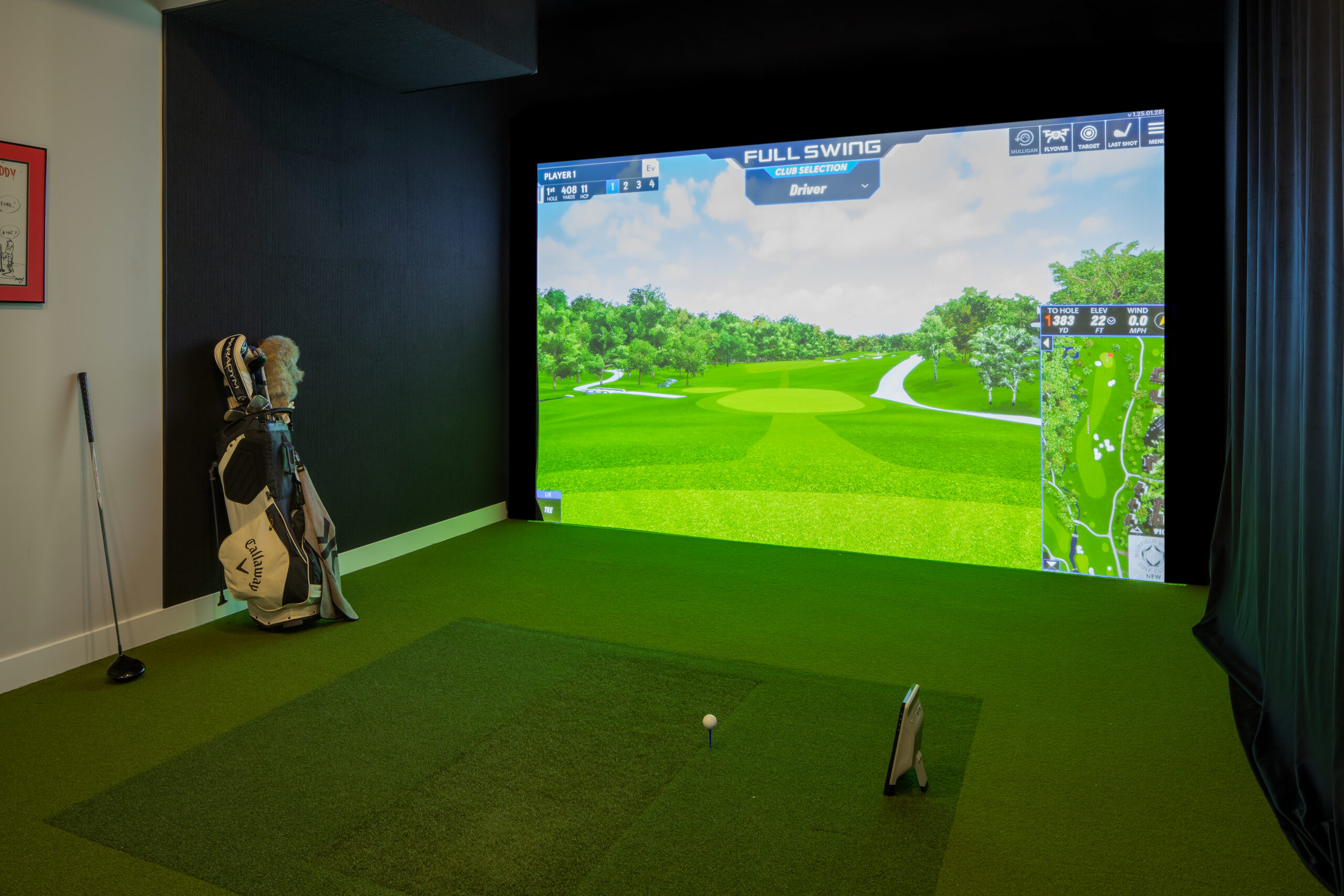
A solid home golf simulator in Cincinnati runs roughly $15,000 to $80,000 or more, installed. Where you land depends on a handful of choices: the launch monitor, the enclosure and screen, the room around it, and the software and courses you want to play. That range includes professional design, install, and calibration. The final number comes down to your space, the brands you pick, and how finished you want the room to feel. A site survey is what turns the range into a real quote.
What drives the price
The launch monitor is the brain of the system. Radar and camera based units from Foresight, TrackMan, Uneekor, and Full Swing sit at the top for accuracy and cost. The enclosure, screen, and impact surface are the next big piece. A proper enclosure is a tensioned, acoustically treated bay built to take thousands of strikes safely, not a sheet hung on the wall. Then there is the room itself. Automated lighting, audio that does not annoy the floor above, climate, and finish work all add up, and they are what make the space feel like a room instead of a garage.
The system and the courses
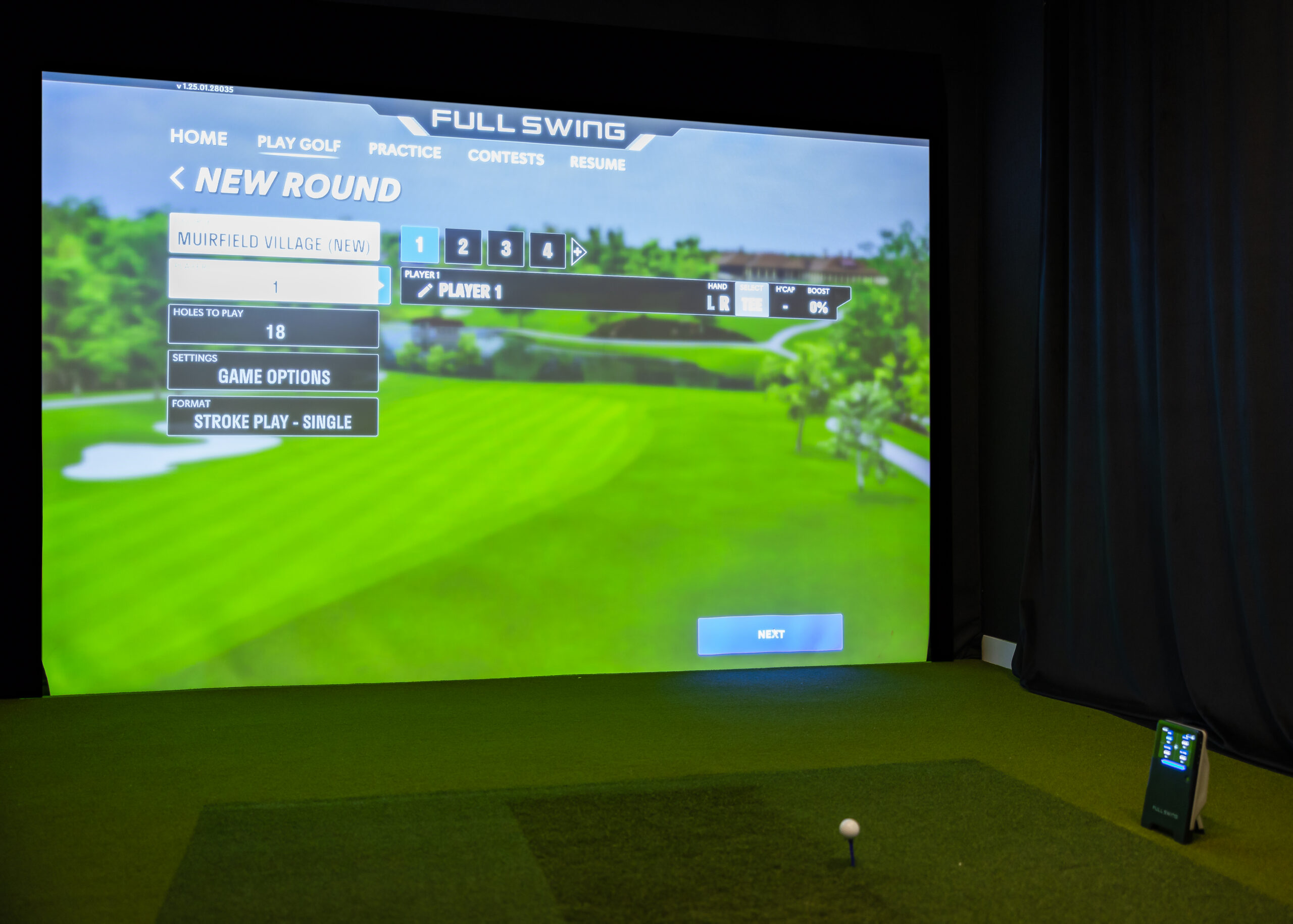
This is the part that surprises people, and it is one of the biggest reasons a simulator package lands on the higher end of the range. The software platform you choose matters, and so do the courses. Most systems come with a base library, but the premium courses cost extra. If you want to play licensed PGA Tour venues, famous resort layouts, or the newest releases, those carry licensing fees that get bundled into the system price. Two homes with identical hardware can end up far apart on cost just because one owner wants the full course catalog and the other is happy with the standard set. When we quote a simulator, we always ask which courses you actually want to play, because that decision moves the number more than most folks expect.
Why use a professional installer
A simulator is equal parts AV, construction, and calibration. Misaimed projectors, audio that bleeds into the rest of the house, and ceilings too low to take a full swing are the three calls we get from do it yourself builds that did not go as planned. A local integrator measures your swing clearance, sets the right throw distance, balances the audio to the room, and calibrates the monitor to your exact space. You end up with a system that works the night you want to play, not a weekend project that becomes a month.
Cincinnati notes for 2026
Basement bays dominate around here, and eight to nine foot ceilings are the first thing we check. Our optimal ceiling height is around ten feet, though we have made a little higher and lower work. Most Cincinnati homes can absolutely handle one with the right design. Multi use rooms are common too, but we do not recommend using the golf screen for showing movies. It will work if you need it to, but the image will not be 4K resolution, so most clients add a separate viewing setup if movie night matters. Winter is peak season, so if you want it live before the holidays, book the survey in early fall. Slots fill fast, which is why we always tell people to plan now and play by kickoff.
Next step
A twenty minute site survey gets you a real number instead of a range. We measure the room, talk through how you will actually use it, and design to your budget. Family owned in Loveland since 1988, we have been building Cincinnati’s favorite rooms for a long time.